· Segal Industries
The published technical focus
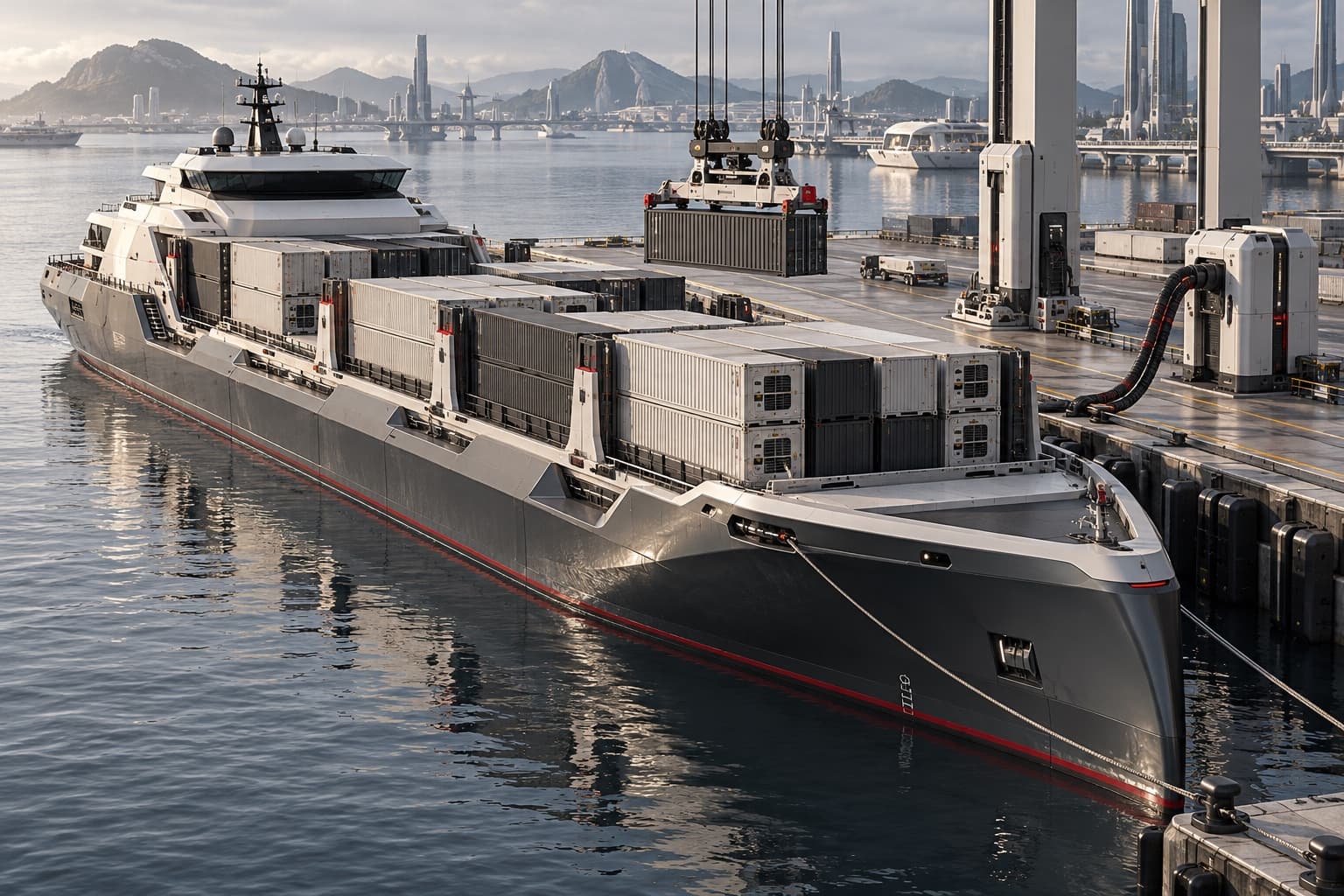
LOS ANGELES — Segal Industries is publishing a technical focus on Drayage One within the Segal Navy portfolio. The article examines the program’s central engineering question and the relationships a useful development scope must preserve. A coastal freighter for dry cargo and containers on a defined route.
A repeated coastal route makes the interaction with shore especially important to the design discussion. Available berth space, loading equipment and the time required to handle cargo influence what a useful vessel arrangement looks like. Drayage One is presented around that practical relationship, including the shore charging and supervisory arrangements identified in its program description.
How the system is framed
The article follows the connection between a modular cargo bay and the wider transport task. A useful configuration must fit the cargo and the facilities on both ends of a route. The same discussion must identify responsibilities for navigation, maintenance and recovery. That approach gives prospective collaborators concrete operating questions to resolve before treating a proposed hull arrangement as a complete freight service.
Drayage One is the shorter hull. Modular bays, shore charging, and navigation that a shore team can supervise. The ship, the quay, and the power between voyages are one operation.
Coastal freight depends on a repeatable relationship between the ship and its ports. Cargo handling, available berth space, charging, and turnaround requirements influence the vessel's arrangement. The route and supervision plan are developed with those practical constraints rather than added after the hull is defined.
Connections that shape the scope
Segal Navy builds freighters, laboratory ships, and floating communities. The hull, the power, the cargo or the living quarters, and the shore watch are one vessel.
The scope connects with Segal Energy to size propulsion, hotel loads, energy storage, and shore power for the vessel. The scope connects with Segal Robotics to run supervised navigation, deck handling, sensor coverage, and safe loss-of-link behavior.
The next technical discussion
The waters, the load or the occupancy, the endurance, and the port define the vessel. Stability, classification, environmental conditions and operator responsibilities guide the development and validation plan.
The Drayage One page provides the program description alongside the broader Navy directory. The new focus is intended to help readers frame a specific question about interfaces, operating conditions or evaluation before a project scope is agreed. It announces the publication of that explanation, with the program’s detailed requirements remaining tied to the work under review.