· Segal Industries
The published technical focus
LOS ANGELES — Segal Industries is publishing a technical focus on Foundry OS within the Segal Fabrication portfolio. The article examines the program’s central engineering question and the relationships a useful development scope must preserve. Schedule the floor and keep the record of the part.
A schedule says what is intended to happen; the production record explains what actually happened to a part. Foundry OS is presented at that intersection. The drawing, material, machine configuration and inspection result need to remain connected even as the available equipment and people change the work that can be performed on the floor.
How the system is framed
The technical focus follows the information needed to move between planning and review. A machine assignment matters because it relates to a process and a specific part, while an inspection result matters because it relates back to the requirements for that part. Keeping those relationships explicit gives the software discussion a concrete purpose. It avoids treating a general dashboard as a substitute for the underlying manufacturing history.
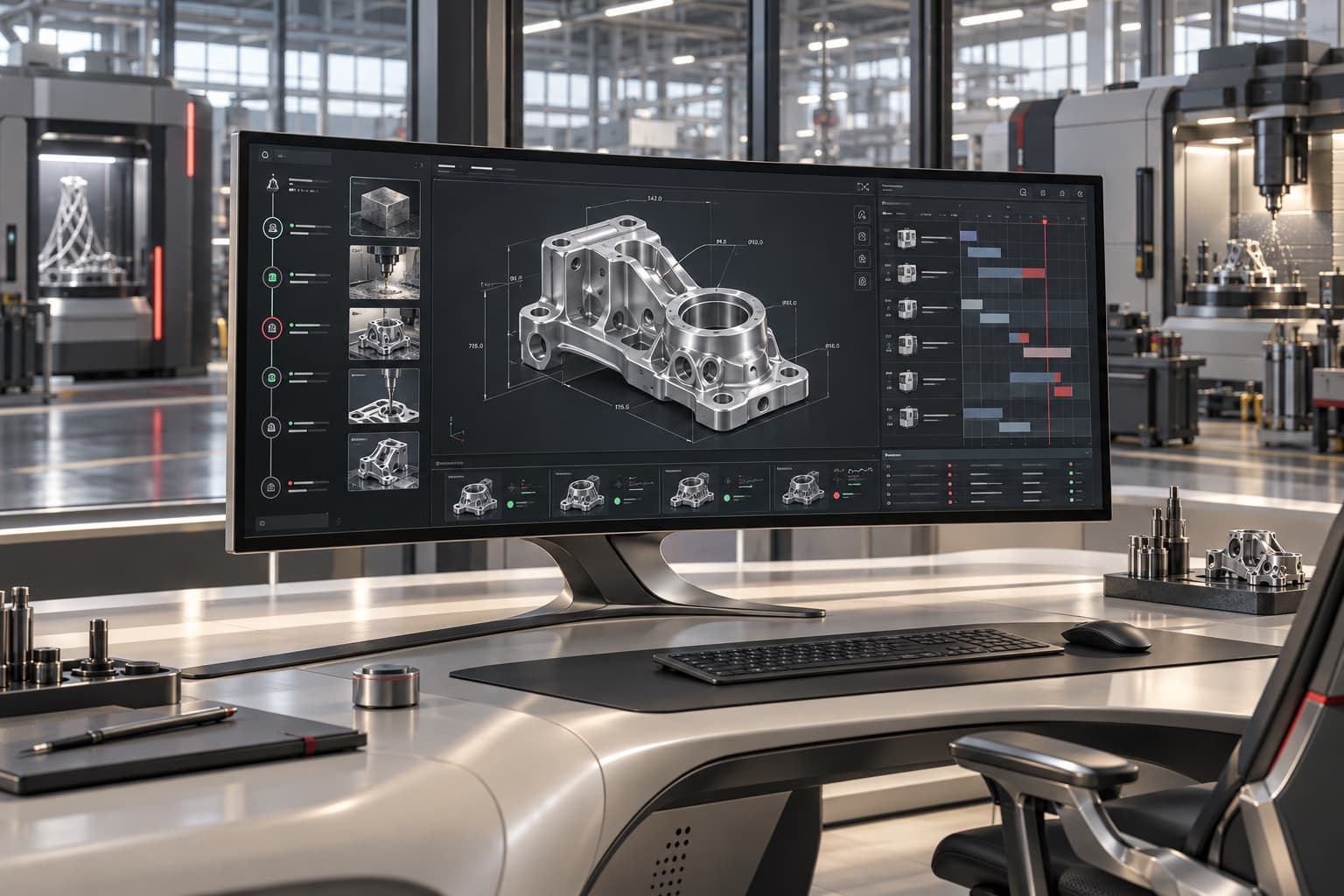
Foundry OS is the software on the manufacturing floor: what is running, what is next, and how the part was made.
A manufacturing record connects the drawing, material, machine configuration, process, and inspection result. Scheduling must account for the equipment and people available to do the work. Foundry OS follows those relationships across the floor so that a part's history remains connected to its production plan.
Connections that shape the scope
Segal Fabrication develops manufacturing equipment and process architectures across additive manufacturing, machining, plasma cutting, metal sintering and waterjet cutting. The work connects part requirements with tooling, process control and inspection.
The scope connects with Segal Robotics to coordinate fixturing, repeatable handling, machine tending, and operator access. The scope connects with Segal Supply to identify feedstock specifications, material traceability, consumables, and sourced-component dependencies.
The next technical discussion
The drawing, the material, the tolerances, the quantity, and the inspection define the process. Equipment readiness, process capability and first-article verification are established before a production scope is agreed.
The Foundry OS page provides the program description alongside the broader Fabrication directory. The new focus is intended to help readers frame a specific question about interfaces, operating conditions or evaluation before a project scope is agreed. It announces the publication of that explanation, with the program’s detailed requirements remaining tied to the work under review.