· Segal Industries
Read The Site First
A building begins with a place. Ground conditions, access, utilities, climate, nearby activity, and the people who will use the site all influence what can be built there. Segal Development approaches the work by connecting that setting with design and fabrication. A digital model becomes useful when it remains related to the physical conditions and responsibilities of the project. Survey information therefore has a continuing role, helping the team understand how the intended structure meets the place where construction must happen.
Connect Architecture With Making
Architecture establishes spaces, relationships, circulation, and the experience of a building. Mechanical and fabrication decisions help determine how those intentions can be constructed and supported. Bringing the disciplines together gives the design a more complete foundation. A wall is part of a space, a structure, a services strategy, and a construction sequence at the same time. The development conversation becomes stronger when those relationships are examined together and the practical requirements of making remain visible throughout the design process.
Follow The Toolpath Back To The Design
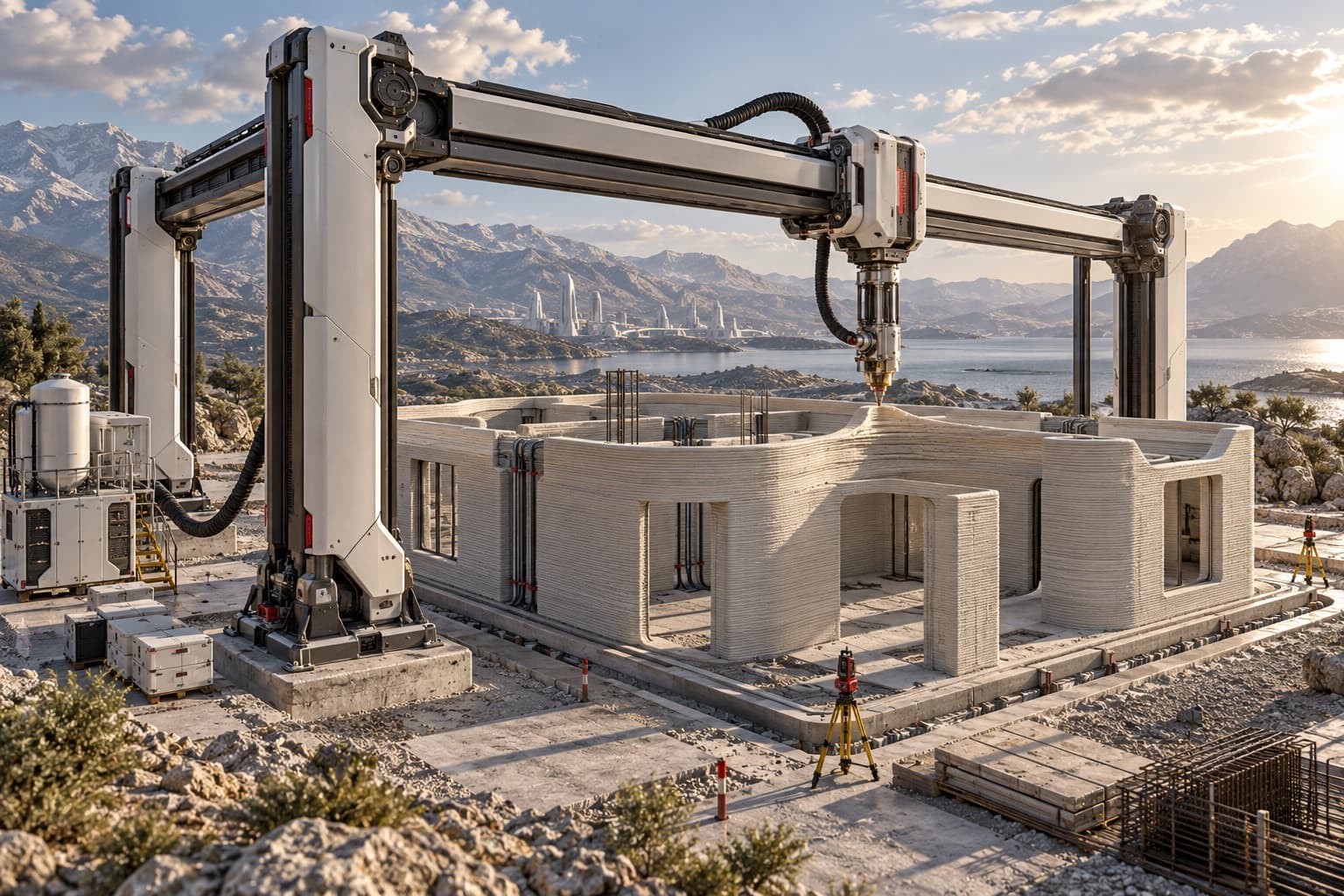
Large-format printing and digitally directed fabrication connect machine movement with a physical result at building scale. The path the machine follows must relate to geometry, material behavior, access, and the sequence of construction. Survey to toolpath describes that chain of decisions. Understanding it helps a team identify what must be prepared on site and what evidence is needed to evaluate the process. It also connects a change in the design with the work required to produce and check the revised result.
Include What Happens Between Operations
Material preparation, equipment placement, service connections, inspection, and the movement of people influence a construction process. These activities deserve a place in the plan alongside the main fabrication operation. A machine can only perform useful work within a site that supports it. Thinking through the transitions between tasks helps teams understand responsibilities and dependencies. It also provides a clearer basis for reviewing a proposed approach against the actual conditions of a project and the requirements of the people managing it.
Design For The Building's Life
A completed building continues to need energy, water, ventilation, access, maintenance, and information about its systems. Modernization should consider that continuing life from the beginning. Equipment needs to be reachable, interfaces need to be understandable, and records need to remain useful to the people who inherit responsibility for the property. Connecting those operating needs with the original design helps a development team look beyond the construction milestone and consider how the building can support its occupants over time.
Build A Coherent Development Brief
A useful brief brings together the site, intended use, design requirements, fabrication approach, local review needs, and long-term operating responsibilities. It creates a shared basis for examining opportunities and limitations without losing sight of the larger ambition. We want building modernization to connect advanced tools with the practical circumstances of real places. That means giving equal attention to the structure, the process that makes it, and the people who will occupy, maintain, and adapt it after the equipment has left the site.