· Segal Industries
Start With The Waters
A vessel operates within waters that impose their own conditions. The route, weather, port access, water depth, and intended endurance shape the hull and the systems it carries. Coastal freight asks different questions from an offshore laboratory or a floating community. Segal Navy begins with that setting. The purpose is to connect the vessel's physical architecture with the people, cargo, or research that justify its time on the water and define the support it will need.
Make The Load Specific
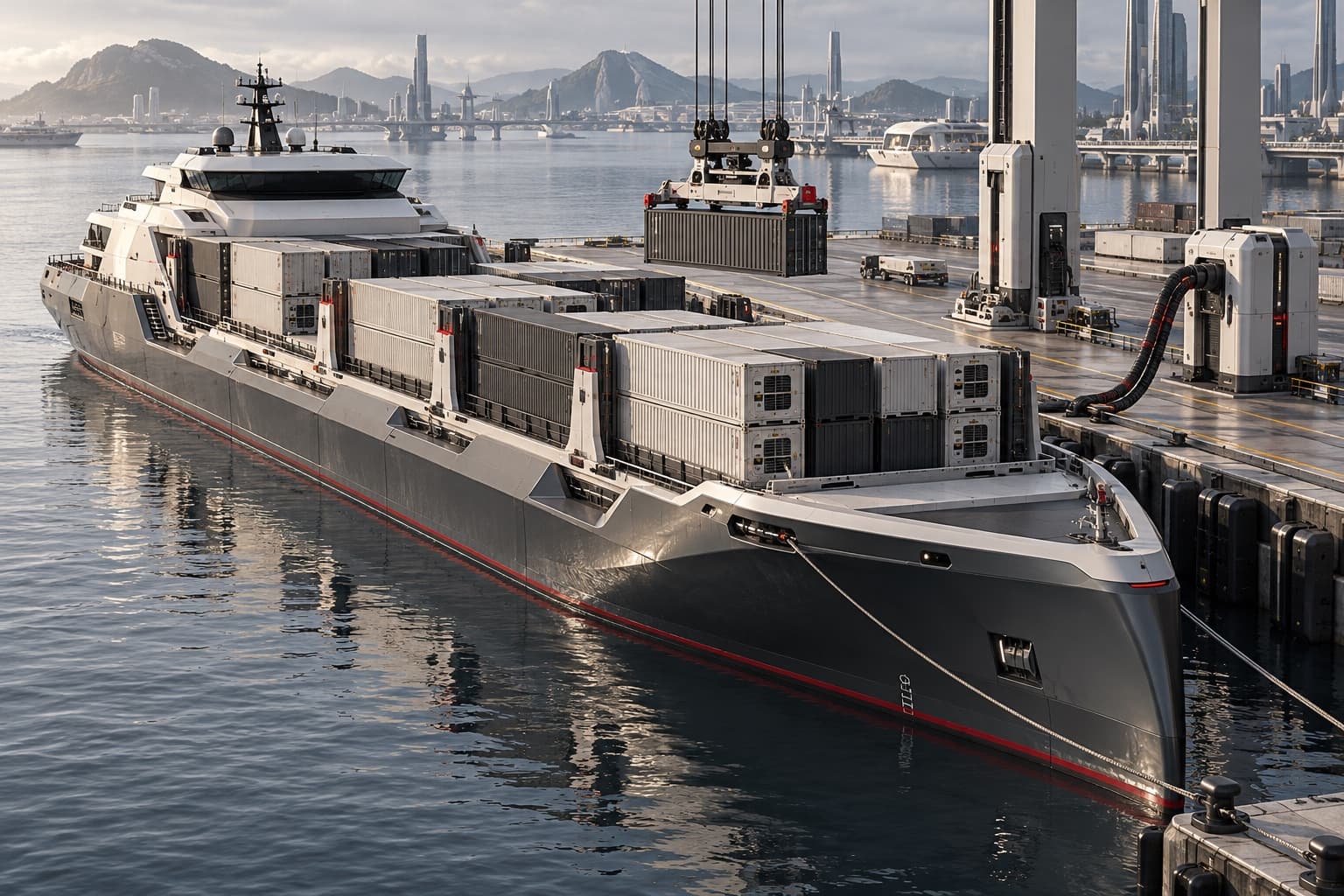
A description of cargo needs to include how it arrives, how it is restrained, and how it leaves. Containers, dry freight, instruments, and occupied spaces create different arrangements within a vessel. Access routes and working clearances matter as much as the volume available. Programs such as Drayage One and Sounding place those differences at the center of the discussion, using the task to organize the hull, deck equipment, services, and spaces required by the mission.
Connect Power With The Port
The energy architecture extends beyond machinery inside the hull. A charging connection, a maintenance location, and the interval between voyages influence what a route can support. Shore infrastructure therefore belongs in the same engineering picture as propulsion and onboard distribution. Evaluating the vessel together with its port gives a clearer view of the operating cycle. It also helps reveal which dependencies belong to the shipbuilder, the operator, the terminal, and the wider energy network.
Treat Occupancy As A System
Floating habitats bring architecture directly into maritime engineering. The arrangement of living space connects to utilities, circulation, access, maintenance, and the behavior of the structure in its environment. Occupancy introduces responsibilities that continue every day the platform is used. Tide Commons and Atoll explore this relationship between a place to live and the vessel or platform supporting it. The design conversation must hold both together, with practical services supporting the quality of the spaces people inhabit.
Keep The Shore Team In View
Supervision requires more than a moving position on a map. The shore team needs relevant information, clear authority, and a way to understand the vessel's condition and intentions. Helm and Tideline describe complementary parts of that relationship between onboard control and fleet coordination. A change made during configuration should remain understandable to the people responsible for the route. Connecting those decisions helps the vessel's digital record reflect the physical system that actually goes to sea.
Build A More Complete Maritime Brief
A strong brief identifies the waters, the load or occupancy, the endurance, and the port. It also names the operator and the responsibilities that must be resolved through development and classification work. These details create room for ambitious maritime design because they give the ambition a real environment. We see future ships as connected industrial systems: hulls, equipment, information, and shore infrastructure organized around a useful task, with the whole voyage considered from the outset.