· Segal Industries
A new view of the portfolio
LOS ANGELES — Segal Industries is publishing an expanded introduction to Segal Robotics, bringing its programs and engineering priorities into a connected public overview. The introduction is designed for readers moving from a broad area of interest to a specific technical discussion. The robotics introduction connects the scale of a component with the scale of a task. A joint is part of a machine, and the machine must work in an environment shared with people, material and other equipment. The overview follows that relationship through motion, sensing and control. It gives technical readers a route into individual hardware families while preserving the context of the complete machine.
The work inside the division
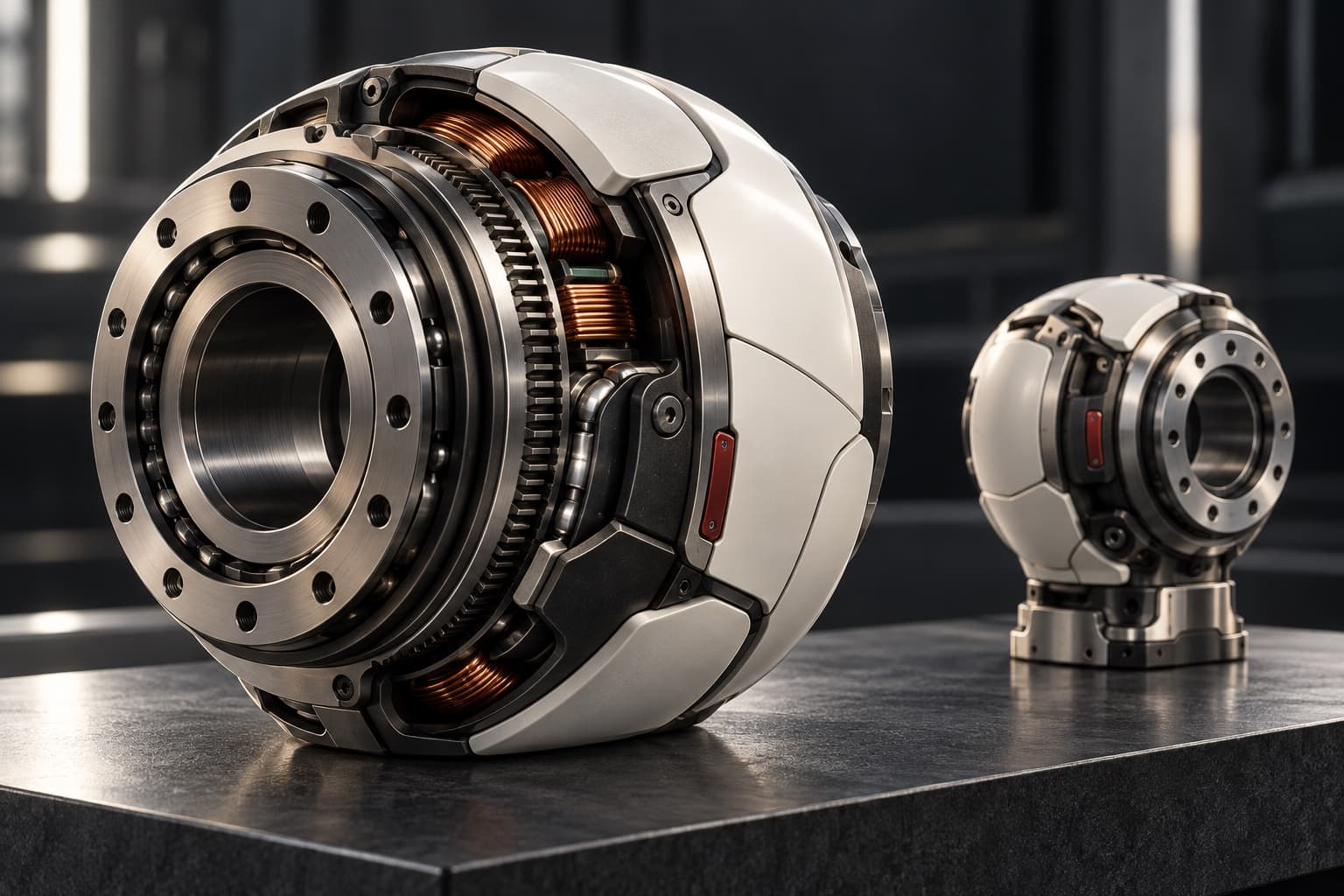
Integrated actuators, servo drives and force-and-torque sensing are evaluated as a coordinated electrical and mechanical system. Sensor timing, machine geometry, and local control support predictable work in the physical environment. Operator, Earthwork, Steward, and Continuum put the same components to different tasks and environments.
The introduction uses the division’s development sequence to organize that work: measure task variation and required performance; model sensing, actuation, and supervised control; and specify repeatable tests and failure responses. The intended output is a component or machine architecture with a measurable test plan.
The interfaces around the system
The scope connects with Segal Fabrication to coordinate end effectors, fixtures and mounts with the part and the proposed process. The scope connects with Segal Electronics to define sensor, drive, power, and emergency-stop interfaces for the proposed work cell. The scope connects with Segal Agriculture to translate crop handling, moisture, sanitation, and outdoor variability into task requirements.
Proposed deliverables include component requirements for the proposed actuation, sensing and control architecture; a machine or work cell, with guarding, stops, and fault behavior; acceptance criteria tied to the load, motion cycle and working environment. These establish a practical basis for discussing the work and the evidence it should produce.
Beginning a technical conversation
The load, the motion, the environment, and how a person works with the machine define the scope. Guarding, stopping behavior, fault recovery and validation criteria are specified alongside the performance requirements.
The published introduction links to the Segal Robotics program directory and its individual system descriptions. Readers can use those pages to identify the relevant scope, then bring the requirements of their own project into the discussion. This publication introduces the portfolio and its development questions; project-specific specifications and responsibilities are established through the applicable review.