· Segal Industries
Follow The Motion
A machine expresses its purpose through motion. The path of an arm, the response of a joint, and the behavior of a moving platform all depend on decisions made below the visible surface. Motors, transmissions, sensors, drives, and control software must work as one assembly. Segal Robotics approaches that assembly as the beginning of a larger architecture, connecting component behavior with the task a complete machine will eventually perform and the environment in which it must operate.
Integrate The Physical Package
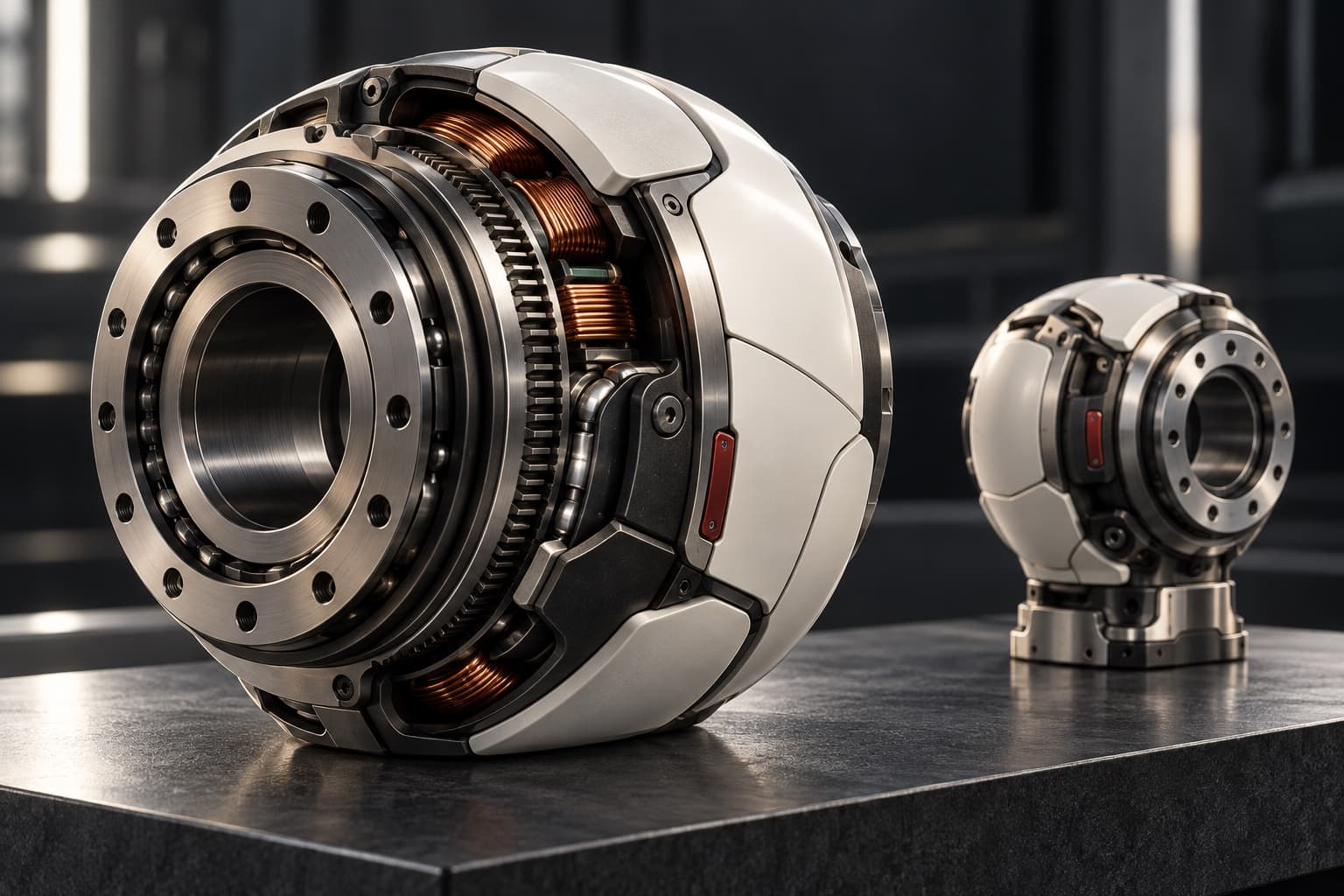
An actuator has to fit into a real structure. Its mounting, electrical connections, cooling needs, and service access shape the surrounding mechanism. Packaging decisions can make a joint easier to assemble and maintain or introduce constraints that appear later in the machine. Integrated actuators bring those relationships into one discussion. Their value depends on how well the complete package supports the intended movement, with interfaces that engineers can understand and evaluate within the larger mechanical system.
Measure The Interaction
A machine needs information about its own state and its interaction with the world. Position, force, torque, and other measurements give a control system a basis for responding. The usefulness of a sensor depends on where it is placed, how its signal is interpreted, and what the machine does with the result. Force and torque sensing therefore belongs inside the mechanical design conversation, alongside the structures and contact conditions that determine what is actually being measured.
Connect Control With Reality
Control software operates through physical equipment that has limits, tolerances, and changing conditions. The drive, sensing path, and mechanical response need to be understood together. A desired movement should be evaluated against the loads, speeds, and operating conditions of the task. Connecting these details helps teams describe the evidence they need from a prototype or test assembly. It also creates a clearer path between an individual component specification and the behavior expected from a complete robotic system.
Make Maintenance Part Of The Architecture
Service access affects the useful life of a machine. A component that can be reached, identified, replaced, and checked has a different support burden from one buried inside an assembly. Cable routing, connectors, mounting arrangements, and diagnostic information all contribute to that difference. Designing them deliberately helps preserve a machine's intended behavior as it is used and repaired. The technician and operator deserve a place in the architecture alongside the engineer writing the original movement requirement.
Build From A Clear Task
The most productive robotics brief describes the movement, load, environment, duty, and people involved. Those details guide the choice of components and the work needed to verify their interaction. A common platform can provide a foundation while the task gives each machine its specific character. Our ambition is to connect capable motion technology with that practical discipline, creating a development path that remains understandable from the joint and its sensor through to the work the whole machine is intended to perform.